
Workplace Performance. Technical Capability. Organisational Resilience.
Marshall Hamilton advises organisations whose performance depends on highly skilled technical people. We assess the workplace, working practices, and organisational conditions that influence how effectively your teams perform, collaborate, and remain with the business.
Our work sits at the intersection of operational performance, workplace design, psychological health and talent retention.
Using recognised frameworks - including BSI PAS 6463, ISO 9001, and ISO 45003 - we provide leadership teams with an evidence-led view of where avoidable friction exists, what it is costing the organisation, and where intervention is justified.
Independent assessment. Executive insight. Practical action.
Independent Workplace and Organisation Advisory

When Capability Is Not the Problem.
Organisations invest heavily in recruiting technical expertise. Yet the conditions in which that expertise is expected to operate are often given considerably less scrutiny.

-
Noise and Interruption
-
Poorly designed workspaces
-
Inefficient communication
-
Ambiguous expectations
-
Excessive meeting load
-
Inconsistent management practices
Individually, these factors may appear relatively minor.
Across a technical organisation, their cumulative effect can be material.
Marshall Hamilton helps leadership teams distinguish between individual performance issues and the organisational conditions in which performance takes place. That distinction matters. It can affect productivity, employee experience, retention, management time, and operational risk.
The Environment
We examine the physical conditions in which people work, including:
-
Acoustics and background noise
-
Lighting and visual conditions
-
Workspace configuration
-
Shared and flexible working arrangements
-
Opportunities for uninterrupted work
-
Sensory and environmental demands
The objective is not to prescribe a particular workplace model. It is to establish whether the existing environment supports the work the organisation requires people to perform.
We begin with a structured diagnostic rather than a predetermined solution. Our assessment considers three connected dimensions of organisational performance.
Diagnose before you intervene
Working Practices
We examine how work is organised and how information moves through the business. This may include:
-
Meeting structures
-
Communication channels
-
Response expectations
-
Interruption and availability norms
-
Workflow and onboarding
-
Role clarity and management practices
We identify where unnecessary complexity or friction may be affecting the effectiveness of specialist teams.
OUR APPROACH
Organisational Risk
We consider relevant psychosocial and operational factors, including workload, demands, communication, management expectations, and workplace conditions.
Where appropriate, our assessment is aligned with ISO 45003 and other relevant recognised frameworks. The result is a structured view of the issues that warrant attention — rather than a generic set of workplace recommendations.
The Initial Diagnostic: An Independent Assessment for Leadership
The Initial Diagnostic provides an executive-level assessment of the factors that may be affecting performance, retention, and workplace effectiveness.
We review the available evidence, assess the working environment and relevant practices, and identify areas where further investigation or intervention may be warranted.
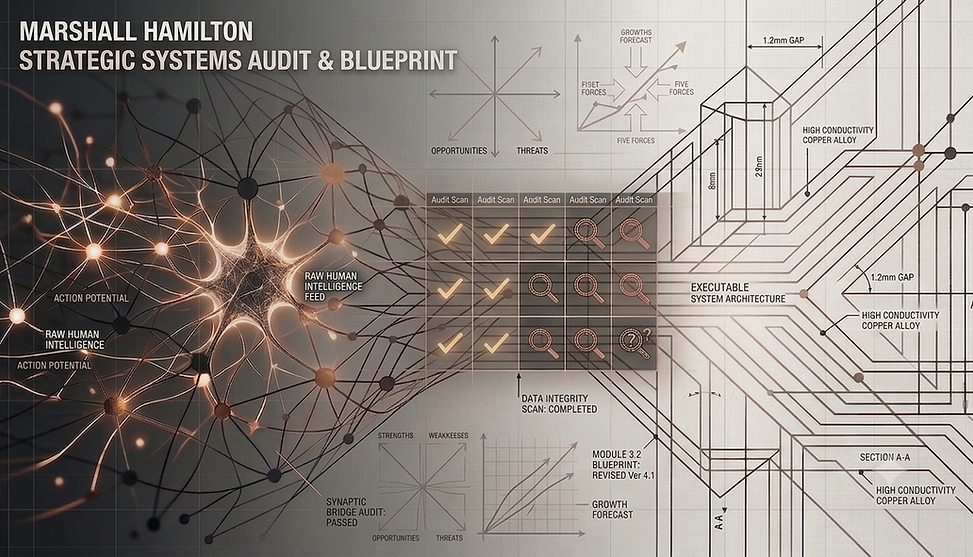
Where further intervention is appropriate, we develop a proportionate roadmap for the next stage.
The engagement typically covers:
-
Workplace environment: Assessment of the physical conditions that support focused technical work.
-
Working practices: Review of communication, collaboration, and management practices that may create avoidable friction.
-
Operational context: Consideration of how workplace conditions interact with the organisation's operating model and workforce requirements.
-
Psychosocial factors: Identification of relevant workplace factors that may contribute to stress, fatigue, or reduced effectiveness.
-
Executive findings: A concise assessment of the principal findings, their organisational significance, and the priorities for action.

A Framework for Better Decisions
Recognised Standards. Applied in Context.
Marshall Hamilton applies the principles of these internationally recognised standards as the foundation for our independent assessments. They are not treated as a checklist. We apply them in the context of the organisation, its people and the work that needs to be performed.
ISO 9001
Quality management and operational consistency
We consider the processes and management systems that influence how effectively work is delivered. The focus is on identifying unnecessary variation, complexity and inefficiency - particularly where these affect specialist teams.
ISO 45003
Psychological health and psychosocial risk
We consider workplace factors that can affect psychological health and organisational performance, including workload, communication, management practices and working conditions. The objective is to provide leadership with a clearer understanding of relevant psychosocial risks and where they may require action.
BSI PAS 6463
Design for Mind
We use BSI PAS 6463 to inform assessment of the physical workplace and the ways in which environmental conditions can support different cognitive and sensory requirements. This includes consideration of acoustics, lighting, workspace design and opportunities for focused work.
Organisations Where Technical Capability Matters
Our work is particularly relevant to operations where performance depends on specialist knowledge, sustained concentration, and the retention of scarce technical talent.

Aerospace & Advanced Engineering
These sectors operate under demanding performance requirements and rely on highly specialised workforces. We evaluate whether your physical and systemic environment actively supports the people responsible for delivering that critical capability.
Financial Technology & Quantitative Teams
In analytical, high-velocity environments, sustained concentration and cognitive capacity are non-negotiable. We examine the structural factors that influence sustainable performance, error reduction, and elite talent retention.
Where We Work
Data, Systems
& Cybersecurity
Specialist teams require frameworks that protect sustained attention, secure communication, and reliable decision-making. We identify where existing operating practices may be introducing avoidable friction or cognitive fatigue.
Advanced Manufacturing & Logistics
Complex operational environments depend on seamless processes and experienced personnel. We assess the direct relationship between workplace infrastructure, daily operations, and your ability to consistently deploy technical expertise.
Executive Leadership & Advisory Architecture
Marshall Hamilton is built on over 25 years of senior leadership experience, specialising in how neurodevelopmental profiles interact with complex, high-stakes environments.
Holding postgraduate-level credentials in neurodevelopmental strategy and compliance, our leadership bridges the gap between clinical understanding and practical organisational realities.
We understand firsthand what it takes to direct complex inclusion strategies without compromising on operational excellence.
Operating independently nationwide, we do not just consult. We help leadership teams apply frameworks like ISO 9001, ISO 45003, and BSI PAS 6463 in a way that is proportionate, actionable, and focused on protecting your most valuable technical capability.